How High-Level Amazon Sellers Use Boxem to Scale Faster

1
min read
May 7, 2026

When Koda sat down to review his Amazon dashboard, the numbers spoke for themselves: $30k in gross profit over the last 30 days. For a seller who sources 98% of his inventory from retail stores, that level of success usually comes with a massive side of operational chaos. Between the check-in lag at the warehouse and the literal Tetris game required to pack boxes, the transition from a job to a scalable business requires a serious shift in strategy.
By moving his operations over to Boxem, Koda demonstrated how top-tier sellers are moving away from manual calculators, spreadsheets, and clunky software to get their money back into their pockets faster.
Getting Cash Back in the Pocket
One of the most critical metrics for any sourcing-heavy business is the buy cost-to-expected sales value ratio. Koda’s Inventory page in Boxem revealed a highly efficient operation; his in-stock buy cost was roughly a third of his projected sales.
"I like how it’s showing me with one button. Boom. Shows it all in front of me, and it’s giving me a rough metric...I don't have to really whip out a calculator."

For a seller, this transparency matters because it immediately identifies junk inventory. If the buy cost comes too close to the sales value, it’s a signal that capital is tied up in slow-moving stock rather than being reinvested in fresh, profitable products.
Automating tedious tasks with tools like Boxem isn’t just helpful; it’s a competitive advantage. It helps move inventory faster, streamline workflows, and get cash back into businesses sooner.
The Real Difference: Manual vs. Automated
The Shortcut to Getting Ungated
When you source most of your inventory from retail stores, a common frustration is finding a killer product only to realize you’re restricted from selling it. Koda can utilize Boxem’s bulk ungating tool to scan hundreds of brands simultaneously. This process automates the application in Seller Central by looking for brands that don't require invoices for approval.
By running this on an established account, sellers often find they are suddenly approved for hundreds of brands they never even considered scanning. Beginner Amazon sellers typically see 50-100 brands ungated automatically using the Boxem bulk ungate check. It turns the sourcing process from a guessing game into a targeted search for specific, approved inventory.
Beating the Check-In Lag with Optimized Shipments
The check-in lag is the silent killer of profit margins. When inventory sits in a trailer at an Amazon fulfillment center, it isn't making money. Koda’s strategy for beating this involves optimized shipments. Instead of sending a massive 200 lb shipment to a single location, Boxem helps split the load into five identical boxes, each heading to a different destination.
Why This Matters for the Week:
- Faster Sales: A box sent to a local fulfillment center might check in within a few days, while others are still in transit.
- Buy Box Advantage: By getting some inventory live immediately, a seller can claim the Buy Box and start moving units while competitors wait for their shipments to be transferred and processed.
- Cost Savings: While it requires more upfront work to pack identical boxes, optimized placement results in $0 placement fees, which add up significantly over thousands of units.
"You are playing Tetris in those boxes, man. I was terrible at Tetris, but I'm a Tetris king now."
The One-Touch Rule for Efficiency
Efficiency in a warehouse or home office is built on touching the product as few times as possible. Koda’s team can use Boxem’s auto-print setting for FNSKU labels to streamline their packing process. As soon as an item is assigned to a box, the label shoots out of the printer. The item is picked up once, labeled, and dropped into the box.
This eliminates the scavenger hunt of printing a giant sheet of labels and then trying to match them to a pile of products. It’s a small tweak that saves hours over a month.
Putting Feedback on Autopilot
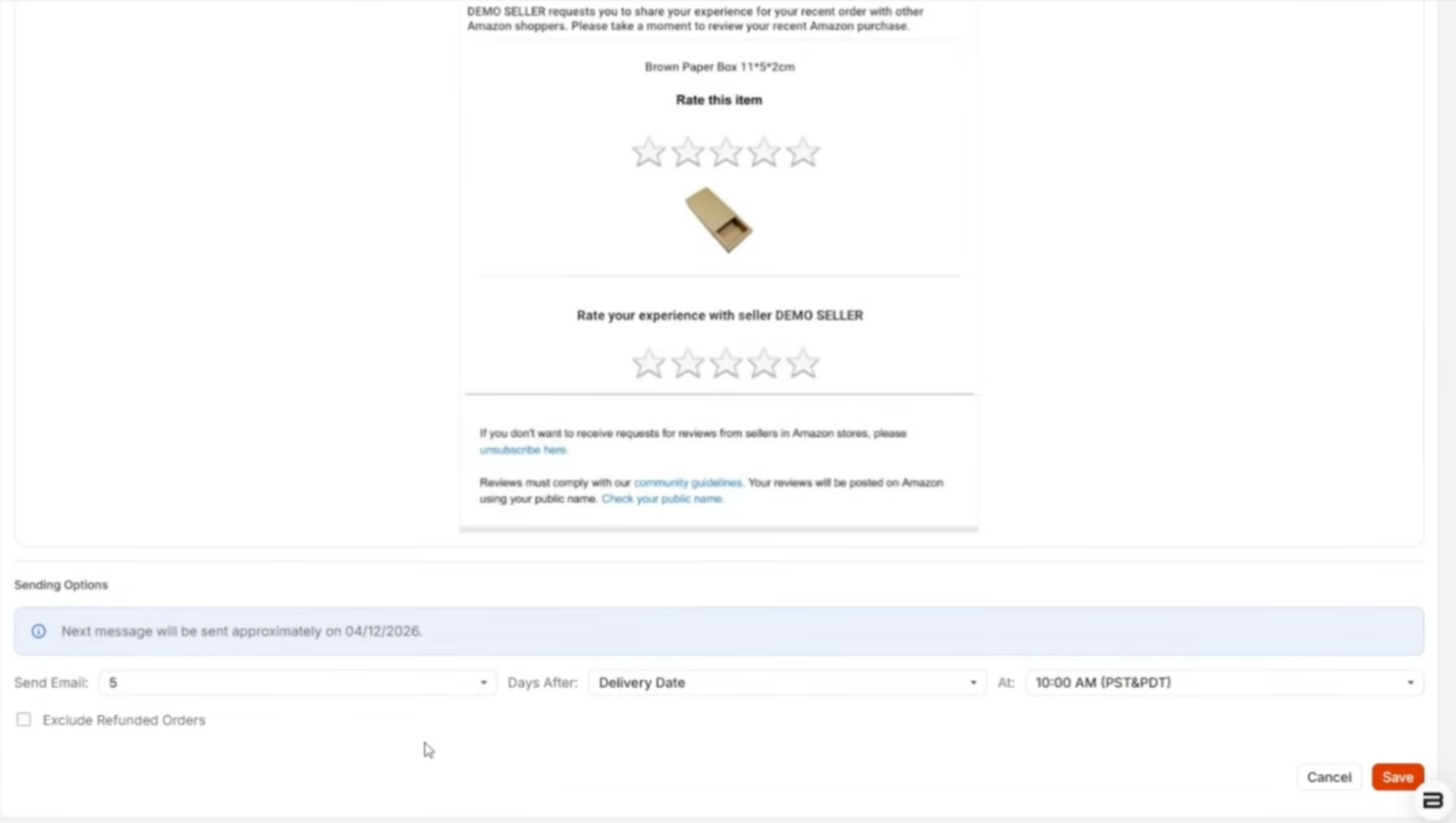
Positive feedback is the lifeblood of a healthy Amazon account, but collecting customer reviews can be a slow grind. Koda can implement Boxem’s automated feedback requester with a specific, strategic exclusion: FBM (Fulfillment by Merchant) orders.
"It sucks to say, but to be putting all that trust into any person who's part of the shipping carrier company [for FBM orders]...anything can happen, and then you're getting blamed for it."
Because FBA (Fulfillment by Amazon) covers shipping-related complaints, sellers are much safer asking for feedback on those orders. Setting a five-day delay ensures the customer has had time to enjoy the product, while the purchase is still fresh in their mind.
By automating these boring parts of the business with Boxem, sellers like Koda can stop acting as data-entry clerks and start acting as CEOs, focusing on high-level sourcing that drives those $30k months.
Want to see a breakdown of how established sellers like Koda can use Boxem to scale their Amazon stores? Watch the full guide here on YouTube for free:
Subscribe to our Weekly Newsletter
No spam, notifications only about new products, updates.
.png)

Get Started Today,
Ship Smarter with Boxem
Boxem streamlines all operations so you can focus on what truly matters.
.png)