Amazon FBM for Beginners: How to Build Faster Cash Flow in 2026

1
min read
June 4, 2026
Every Amazon seller knows the frustration: you find a great product, send it to FBA, and then wait weeks for Amazon to receive it. While your inventory sits in limbo, prices change, competition increases, and your cash stays tied up in inventory that you can’t sell.
That's where FBM (Fulfillment by Merchant) comes in.
Instead of shipping inventory to Amazon, you store the products yourself and ship them directly to customers as orders come in. For beginners, FBM can be one of the fastest ways to generate cash flow because you can start small, test products quickly, and reinvest your profits sooner.
You don't need to buy huge quantities or build large FBA shipments. Buy a few units, list them, sell them, and repeat.
The Low-Cost Shipping Supply Checklist
One of the biggest hurdles that freezes new sellers in their tracks is the fear of shipping supplies. They think they need fancy custom labeling, heavy industrial machinery, or expensive warehouse contracts. The reality is that FBM requires almost zero startup capital for supplies. In fact, you only need three basic items:
- Shipping labels
- Poly mailers for lightweight items
- Plain, unbranded boxes for larger products
First up, you need shipping labels. The absolute best part? You can get these completely free by heading to the UPS website and ordering their blank labels; they give these out as long as you are actively using UPS. If not, they’re cheap on Amazon or ULINE.
Unlike with FBA, you don't have to deal with any barcode-printing process. There are no FNSKU labels or anything like that with FBM, which is super convenient. After making a sale, you just print the standard shipping label and slap it onto the package.
Next, grab some standard poly mailers from Amazon. Keeping sizes like 9x12 and 12x15 handy is the ultimate beginner setup for clothing or non-fragile items under 1 pound.
For items that require boxes, pick them up from Walmart or ULINE. Just ensure they are completely unbranded. If a buyer receives a box covered in irrelevant store logos, they might submit a complaint to Amazon, thinking you are drop shipping, which is an easy way to trigger a nasty account violation.
Creating and Restocking Listings in Easy Mode
When you're ready to sell, Boxem makes it easy to create new FBM listings or restock existing ones without digging through Seller Central.
Whether you’re launching completely new FBM listings or restocking your fast-moving seasonal winners, the platform lets you push inventory live onto Amazon in just a few clicks. You can easily manage your active stock counts right from your Inventory page, ensuring you never oversell an item or accidentally miss a massive sales rush because a listing went inactive.
Even better, when you add a new listing or replenish an existing FBM SKU, Boxem allows you to enter your buy costs directly for your inventory items. By locking in what you paid for the stock right out of the gate, the software can automatically track your overall profit after shipping is factored in. You don't have to guess if a product was a true winner because Boxem does the math for you.
How to Set Up Shipping Templates for Hidden Profits
Once your listings are live, you need to build your Amazon shipping templates in Seller Central to maximize your payout. An FBM shipping template is a set of delivery rules that tells Amazon where you'll ship from, how much shipping will cost, and how quickly you'll send the item to the buyer.
For standard and economy orders, keep it simple: charge the buyer $0. Since you aren't paying hefty Amazon fulfillment fees, you can just bake the cheap shipping cost into your product's list price.
Where the real magic happens is expedited shipping. For next-day or two-day delivery, set your template to charge $30 plus a dollar per pound. During busy seasons like Q4, back-to-school, or holidays like Valentine's Day, buyers are often willing to pay significantly more for faster delivery.
You might collect $40 or $50 for expedited shipping from a desperate buyer, but when you purchase the shipping label inside Amazon's system, it might only cost you $12. That extra spread goes straight to your bottom line. Even better, when a customer buys multiple items at once, your shipping cost barely budges, but your profit doubles on a single package.
How to Identify a Profitable FBM Product
Not every item is a good candidate for merchant fulfillment. If you want to avoid getting stuck with inventory that never sells, you have to verify if a listing is FBM-friendly.
Before sourcing inventory, check SellerAmp’s Buy Box Statistics and look for products where FBM sellers are already winning a portion of the Buy Box. A good rule of thumb is to look for listings where FBM sellers account for 20% or more of the Buy Box ownership.
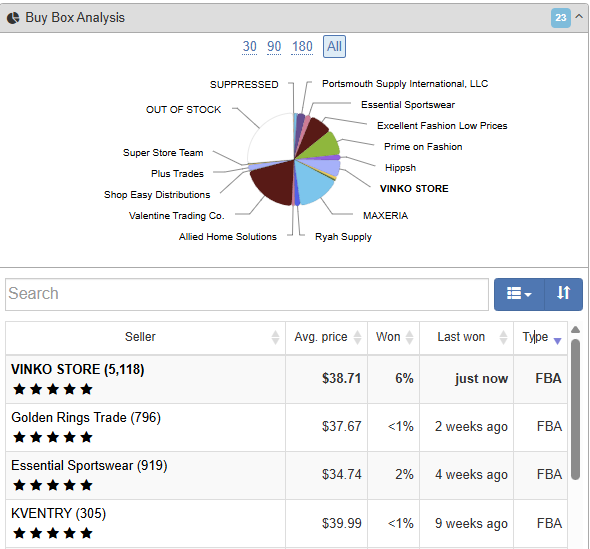
If you look at a listing and notice that 100% of the sales share goes to FBA sellers, that means Amazon is heavily favoring its own warehouses for that product. You would usually need to FBA that specific item to get a piece of the action.
Running the Numbers Correctly
One of the biggest mistakes new sellers make is using FBA profit calculations for FBM products.
Don't just guess at the shipping cost. Always use a profit calculator that accounts for FBM shipping. For instance, on a lightweight clothing item, FBA fees might leave you with a decent 40% ROI. But if you switch the math to FBM and account for a cheap 4-ounce mailer shipping rate, that return can skyrocket to an 80% ROI.
The sweet spot for maximizing this strategy is simple. Look for products that:
- Weigh less than one pound
- Sell for $15–$20 or more
- Have proven demand
- Show FBM Buy Box activity on SellerAmp
By sourcing the right products, locking in your buy costs with Boxem, and turning inventory quickly, FBM can become one of the fastest ways to grow an Amazon business without waiting on FBA check-in delays. Grab those light, seasonal items and watch your capital turn over faster than ever before.
Want to learn more? Watch the full FBM guide on YouTube for free, including shipping cost calculations and product sourcing tips:
Subscribe to our Weekly Newsletter
No spam, notifications only about new products, updates.


Get Started Today,
Ship Smarter with Boxem
Boxem streamlines all operations so you can focus on what truly matters.
.png)